Arons & Solomon Divorce Lawyers | April 20, 2026 | Divorce in Bergen County, NJ

Marriages don’t always fall apart through a single dramatic event. Sometimes, one spouse simply leaves and doesn’t come back. In New Jersey, this situation may qualify as “desertion,” which is one of several legal grounds for filing a fault-based divorce.
If your spouse walked out on your marriage and you live in Bergen County, NJ, learning about how desertion works can help you figure out whether you should file a fault divorce. Read on for more about what qualifies as desertion and what role fault can play in the outcome of your case.
How New Jersey Defines Desertion
Per N.J.S.A. 2A:34-2, desertion (or abandonment) is recognized as a fault-based ground for divorce in New Jersey. To file on this basis, you generally need to show that your spouse voluntarily left the marital home without a reasonable cause and without your consent. The separation must have lasted for at least 12 consecutive months before you can move forward with the filing.
Desertion doesn’t always mean your spouse physically moved out, though. New Jersey courts have also recognized something called “constructive desertion.” This applies when one spouse’s behavior becomes so harmful that the other spouse is essentially forced to leave. In that scenario, the spouse who caused the departure may be considered the deserting party, even though they never left the home themselves.
Fault-Based vs. No-Fault Divorce in New Jersey
New Jersey allows couples to divorce on either fault-based or no-fault grounds. A no-fault divorce only requires that the couple have irreconcilable differences for at least six months. There’s no need to prove that either spouse did something wrong.
So why would someone choose to file on desertion grounds instead?
There are a few reasons a fault-based approach might make sense, such as:
- It can provide context that influences how the court handles alimony decisions.
- It creates a formal record of the other spouse’s conduct, which may matter during contested proceedings.
- In some cases, it may give the filing spouse leverage during settlement negotiations.
That said, fault-based divorces tend to take longer and require more evidence. You’ll need to prove that the desertion actually happened and that it meets every element the statute calls for.
How Desertion Can Affect Alimony and Property Division
One of the most common questions people have about desertion divorces is whether the court will “punish” the spouse who left. The answer depends on which issue you’re talking about.
For property division, fault typically doesn’t play a direct role, though it could in some specific circumstances. In general, New Jersey courts split marital assets based on equitable distribution, which looks at factors like:
- The length of the marriage
- Each spouse’s income and earning capacity
- Contributions each spouse made to any marital property
- The standard of living established during the marriage
Alimony is where fault can carry more significance. Under N.J.S.A. 2A:34-23, judges consider a broad range of factors when deciding whether to award spousal support and how much. Among those factors is the history of the marriage itself, including desertion. If the court finds that your spouse’s abandonment left you in a difficult financial position, that context could work in your favor.
Contact the Bergen County Divorce Attorneys at Arons & Solomon Divorce Lawyers for Legal Help Today
Desertion can leave you feeling stuck, but New Jersey law gives you a clear path forward. If your spouse has abandoned your marriage in Bergen County, contact the experienced family attorneys at Arons & Solomon Divorce Lawyers today for legal assistance.
Visit our law office in Bergen County or give us a call at (201) 487-1199 to schedule a free consultation with our team.
Bergen County Law Office
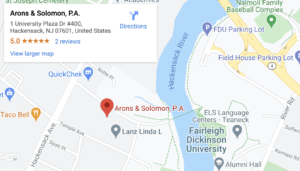
1 University Plaza Dr #400, Hackensack, NJ 07601, United States